
While so much work in the lab can be uncertain, one thing will always remain true: You will fail. But how you bounce back from that little “speed bump” is important for yourself and your research. Kavaljit Chhabra, MPharm, PhD, shares his tips for getting your “lab mojo” back.
All of the sessions at ENDO 2026 in Chicago proved to be a big hit. But certain sessions cause a little bit more buzz than others and one of those was part of the Professional Development tract called “Reframing Failure” which explored the process of regaining momentum after significant professional challenges. A panel of leaders in the world of endocrinology research shared high-level strategies for navigating the aftermath of a setback, rebuilding confidence, and reclaiming a successful career trajectory, despite – or sometimes because of – what went wrong in the lab.
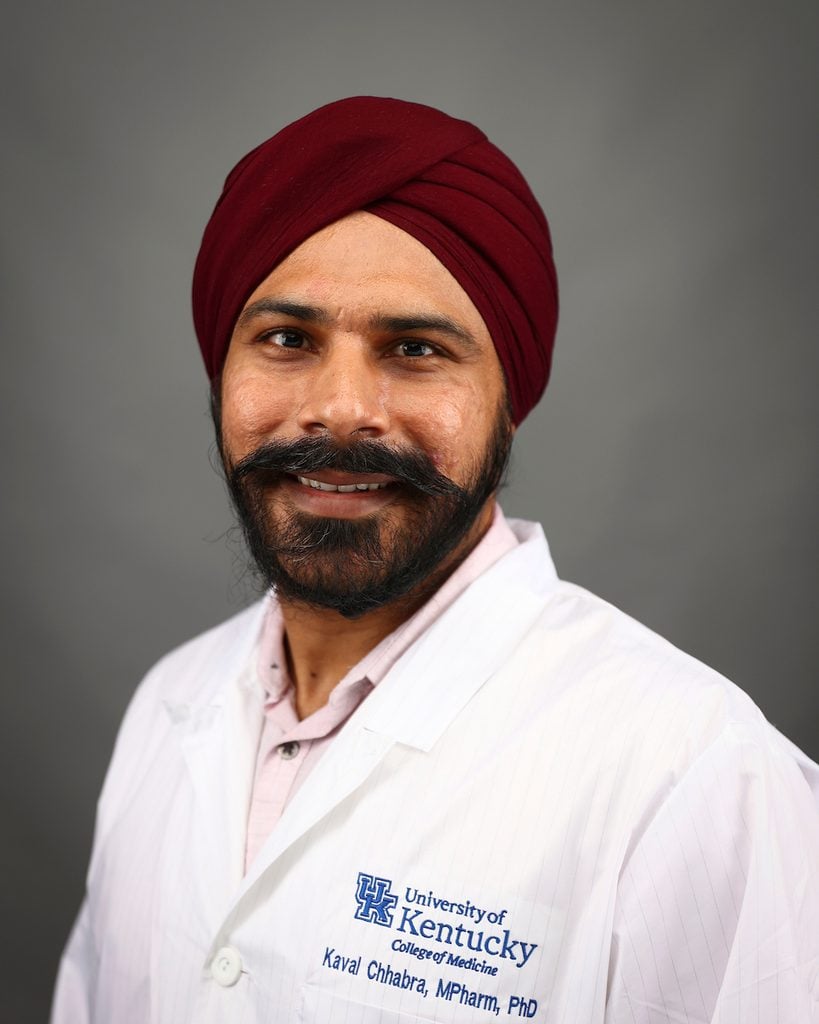
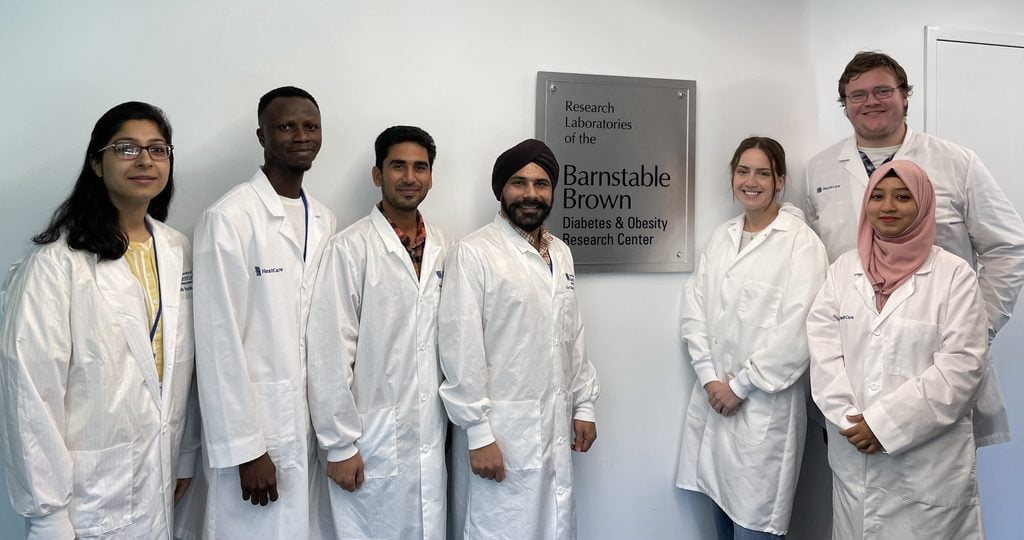
One of the session’s speakers was Kavaljit Chhabra, MPharm, PhD, an associate professor of pharmacology and nutritional sciences and a member of the Barnstable Brown Diabetes Research Center at the University of Kentucky, in Lexington.
Chhabra trained as a pharmacist in India — BPharm and MPharm at Gujarat University — then came to the U.S. for his PhD at LSU Health Sciences Center in New Orleans with Eric Lazartigues, and postdoctoral training at Michigan with Malcolm Low on brain control of glucose homeostasis. In 208, he started his own lab at the University of Rochester and then moved to the University of Kentucky in 2024.
According to Chhabra, his lab studies how the brain and kidney keep blood glucose stable — both independently and by coordinating with each other. “Most of the field studies glucose metabolism; we’re interested in glucose signaling,” he explains. “We’ve identified ADGRL1 as a glucose-binding receptor, which opens up a class of drug targets that didn’t previously exist for treating type 2 diabetes and obesity.”
Chhabra has also been involved in the Endocrine Society’s Career Development Forum on lab management, most recently at ENDO 2026, and he serves on the Society’s Trainee and Career Development Core Committee (TCDCC), which is really where this conversation comes from.
“Problems grow in the absence of conversation. Truthful feedback is a gift, not a punishment. Staying quiet to avoid hurting someone’s feelings protects them today; the honest conversation, had early, is almost always kinder tomorrow.”
Chhabra talks to the Endocrine Society’s Professional Development and Early-Career Special Interest Group (SIG) incoming chair Maria Andrea Camilletti, PhD, about research resilience as well as his own journey through the ups and downs in the laboratory.
Endocrine News: How has your professional journey been so far? Would you describe it as a straightforward path or a more winding one?
Chhabra: Winding. I trained to be a pharmacist. Pharmacology pulled me sideways into research, and my postdoc moved me into neuroscience — an entirely new field. But the winding didn’t stop once the path looked settled. The steepest part came after I became a PI. I was trained to design experiments. Nobody trained me in people management: How to tell a trainee their experiment isn’t worth doing; how to handle conflict in my own lab; how to write an honest evaluation.
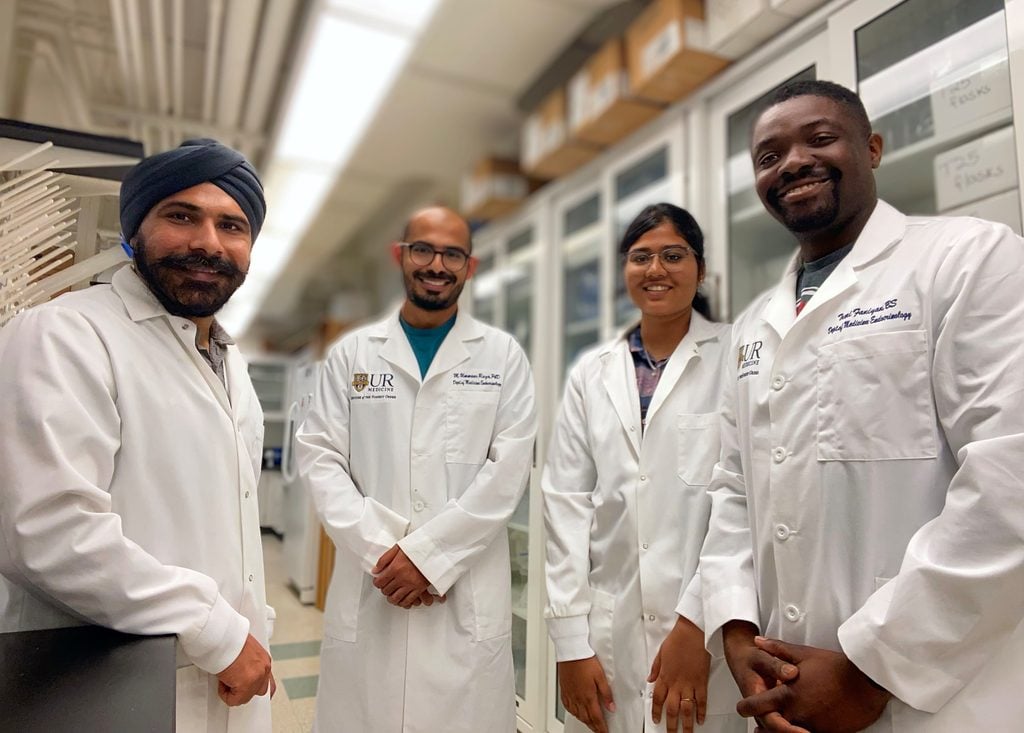
EN: We recently shared a panel discussion on “Reframing Failure” at ENDO 2026. Many of the points raised sparked enriching conversations. Could you share some of those insights with us?
Chhabra: Two things generated the most conversation — one during the panel, one after it.
First, some of my most important failures weren’t scientific failures; they were leadership failures. We’re comfortable discussing experiments that don’t work. We rarely discuss decisions that fail.
What surprised people was the thread connecting them. Each of these failures felt kind of “in the moment.” Saying “Let’s try it” felt supportive. Saying yes to everything felt collaborative. Trusting without checking felt respectful. Avoiding conflict felt considerate. Inflated evaluations felt encouraging. And each one produced a worse outcome for the person I was trying to protect. I had confused kindness with effectiveness.
The second point didn’t come up during the panel at all. People waited until afterwards, one to one. We treat difficult workplace dynamics as flowing downward, and the statistics support that. But early-career supervisors also encounter difficult behavior directed upward, and almost none of us report it. Several people came up to say some version of “I thought I was the only one.” I’d like fewer people to think that.
EN: How do you define “failure,” particularly in your day-to-day work in the lab?
Chhabra: For me, failure means a lesson. That’s not optimism, it’s the definition I work from. If an experiment tells me something I didn’t know, I don’t call it a failure at all. A hypothesis that turns out to be wrong is science working correctly.
So, the only question I ask is what the lesson cost. Some cost a week. Some cost two years. That gives me my working definition: failure is a preventable loss of time, resources, or trust.
A project can fail because we asked a genuinely open question and the answer went the other way — that isn’t failure, that’s the price of asking something worth asking. But six months on a study I knew was underpowered on day one is failure. A conflict I let sit until it damaged a relationship is failure. In those cases, I could have known better, but I didn’t want to offend anyone or hurt their feelings.
Both halves are true at once. Every failure is a lesson. My job is to keep the price down, and my job as a mentor is to make sure my trainees don’t pay full price for lessons I’ve already paid for.
EN: Could you share some examples of setbacks or failures you encountered, and the impact they had on your career?
Chhabra: Six, and they connect.
Couldn’t say no. A trainee would bring an experiment where I could already see the design flaw. Instead of saying so, I’d say “Let’s try it” — I didn’t want to discourage them. Months later we’d land exactly where I’d predicted, with the trainee more frustrated than if I had been direct on day one.
Said yes too often. Collaborations, committees, reviews — each reasonable alone. But reasonable requests accumulate and eventually your calendar reflects other people’s priorities instead of your lab’s.
Trusted without verifying. I assumed capable people would naturally move projects forward. Expectations and communication styles differ. Projects drifted, and often neither of us noticed until too late.
Avoided conflict. The most expensive. Like many scientists I preferred data to confrontation, so when there was tension, I hoped it would resolve itself. Sometimes it did. Often a small issue became a miscommunication, then frustration, then a damaged relationship.
Inflated evaluations. I gave uniformly strong ratings when performance was uneven, thinking it would build confidence. Problems went unaddressed. When they eventually escalated, the response was, in effect: You gave excellent reviews — how can you raise concerns now? I’d removed my own ability to advocate for change.
Tried to absorb everything alone. In my first years as a PI there were situations where the difficulty came from inside my own group, directed at me. My instinct was that a PI handles all of it independently; raising it felt like admitting I couldn’t run my lab. So, I didn’t, and it took far longer to resolve than it should have.
The cumulative impact was that my first years running a lab were slower than they needed to be. Not because the science was wrong, but because I was spending judgment poorly.
EN: What key lessons did you take away from those experiences?
Chhabra: Boundaries are part of mentorship. Saying no to an experiment isn’t saying no to a trainee; it’s saying yes to a better use of their time.
Focus is a resource. Before accepting anything I now ask: Does this advance the lab’s mission, is this something only I can do, and what will I stop doing to say yes?
Systems matter. Check-ins, milestones, defined responsibilities — not because people are untrustworthy, but because structure prevents misunderstanding.
Problems grow in the absence of conversation. Truthful feedback is a gift, not a punishment. Staying quiet to avoid hurting someone’s feelings protects them today; the honest conversation, had early, is almost always kinder tomorrow.
And institutional support is for everyone. Your chair, HR, the ombuds office — those exist for faculty as much as trainees. Using them isn’t a failure of leadership. It’s part of it.
EN: What advice would you give to the next generation of researchers on dealing with
failure?
Chhabra: Separate the categories. A wrong hypothesis is science working. A missed control is a lesson. A judgment failure is a different thing entirely, and it’s the one worth studying, because it’s the one that repeats.
Manage risk at the portfolio level, not the project level. I run projects at deliberately different risk levels — some high-risk, high-reward, others building more incrementally on established findings. If everything you’re working on can fail at once, you’ll experience an ordinary result as a catastrophe. Structure your work so you can afford to be wrong about the exciting things.
Ask for the honest version. If the feedback you receive is uniformly positive, you aren’t learning anything.
And don’t let a failed project become a statement about you; it’s a result about a hypothesis. Data is something you analyze; it isn’t something you carry.
“For me, failure means a lesson. That’s not optimism, it’s the definition I work from. If an experiment tells me something I didn’t know, I don’t call it a failure at all. A hypothesis that turns out to be wrong is science working correctly.”
One more for anyone about to become a supervisor. You won’t be able to solve everything alone and you’re not supposed to. The assumption is that difficult dynamics only run one direction — trainees experience them, supervisors cause them. Part of why the numbers look that way is that early-career supervisors don’t report. We assume a real PI handles it internally, or that having formal authority forfeits our right to ask for help. That assumption costs people years. Build the relationship with your chair before you need it. Know your HR partner by name. Find out whether your institution has an ombuds office — most do, and it’s confidential and informal, which makes it a good first conversation. Document expectations routinely, not reactively. Support at a university is meant to run in every direction.
EN: Lastly, is there a major lesson you learned that fundamentally changed the way you approach science?
Chhabra: That the most important experiment of my career wasn’t in a notebook.
I was trained to treat a failed experiment as information and iterate without ego. It took me far longer to apply that discipline to my own decisions — to look at a leadership mistake and ask what the variable was, instead of hiding it.
Once I did, the pattern was obvious. I’d been running an unintentional experiment for years. Hypothesis: protecting people from discomfort helps them. Result: it doesn’t. Conclusion: clarity, honesty, and accountability outperform empty encouragement, every time.
I don’t see those years as mistakes to conceal anymore. I see them as leadership training — the kind you can only get through experience.
Camilletti is a research scientist at the National Research and Technical Council of Argentina (CONICET), Institute of Neuroscience (INEU), and the Foundation for the Fight Against Neurological Disease in Children (FLENI), Buenos Aires, Argentina.